
The Seven-Step Program
Seven visits a year, each one timed to the turf.
Anybody can put fertilizer down. The difference is knowing what the soil is short of, what your grass type needs next, and whether the window is actually open, because the right product on the wrong week does nothing at all.
It starts with a soil sample. We pull it from your property, send it to Waypoint Analytical, an independent agronomic lab, and read the results before we decide anything.
Those numbers give us pH, phosphorus, potassium, calcium, magnesium and a lime requirement. In the Georgia Piedmont the first answer is almost always lime: this clay runs acid, and below about pH 6.0 a good share of the fertilizer you pay for stays chemically locked up where roots cannot reach it. Fix that and every application after it does more work.
From there each visit is timed to conditions rather than dates: pre-emergent when soil temperature at two inches reaches 50–55°F, nitrogen only once the grass is fully green and has been mowed two or three times. Every visit the technician also walks the property for insect pressure, disease and weed breakthrough and treats what is actually there. That is why the program is seven visits and not one bag of fertilizer in April, and why the April bag is usually the single most common mistake we get called out to undo.
A Georgia year
What the grass is doing, and what we do about it.
The ribbon is warm-season turf color through the year: straw-dormant in winter, greening up as soil temperature climbs past 65°F, deepest through the heat, fading after first frost. Tall fescue runs the opposite way. Each block is as tall as the window it covers.
-
01
Late winter
Pre-emergent & winter weeds
The first pre-emergent goes down while the soil is still cold, ahead of crabgrass germination. Winter annuals already up (henbit, chickweed, poa annua) get a post-emergent on the same visit, and wild onion and wild garlic are treated now because winter is the only window where they are genuinely vulnerable.
-
02
Early spring
Second pre-emergent
Pre-emergent breaks down in the soil, so a second application follows about eight weeks behind the first, with a different mode of action, so the weeds never see the same chemistry twice. Phosphorus and potassium ride along on this visit: both bind in the soil and sit there until the plant is ready to draw on them, which makes this the cheapest place in the year to bank them.
-
03
Green-up
First feeding at green-up
The first feeding lands as the lawn wakes up: a complete, polymer-coated fertilizer whose release is driven by soil temperature and soil microbes, so it feeds only as fast as the grass can actually use it. Quick-release nitrogen this early would push growth the roots cannot support yet; the coated product goes down and waits for the soil to unlock it. A pre-emergent complement rides along to keep the barrier solid into summer. Fescue leans weed control instead; its feeding was done in fall and winter.
-
04
Late spring
Summer weeds & grub prevention
Crabgrass and goosegrass that beat the barrier get a post-emergent while they are still young and killable. Nutsedge and dallisgrass have their own chemistry and their own repeat visits; a broadleaf product does not touch either one. Grub preventive goes down now, ahead of egg hatch, because after hatch it takes a different and less reliable product.
-
05
Summer
Peak nutrition & aeration
This is when warm-season grass does its growing, so this is when it gets fed, and when we aerate, because Bermuda and Zoysia colonize the open holes with new stolons instead of just healing over them. Fescue gets the opposite handling: no push feeding, mowing height up to four inches, and preventive fungicide before brown patch weather sets in.
-
06
Late summer
Armyworm watch & potassium
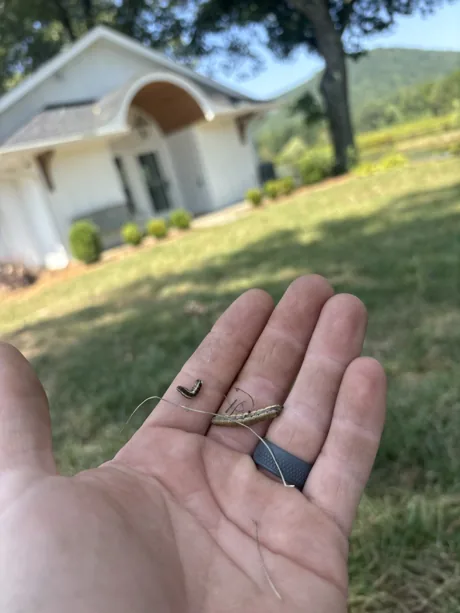
Armyworms can strip an acre in two or three days in August, so every visit is a scouting visit. Nitrogen stops here, the last of it about 30 days ahead of first frost, and potassium takes its place: potash is what builds the cold hardiness that decides how the lawn comes out of winter.
-
07
Fall into winter
Fall pre-emergent & lime
This is actually where the weed year starts. Around September 15th, as soil temperatures break, the first pre-emergent of the cycle goes down at a high enough labeled rate to hold about four months; the late-winter and spring applications are the complements that stretch the barrier to a full twelve months on warm-season turf. Poa annua germinates as soil temperature falls back through 70°F, so this visit decides whether you have annual bluegrass in February. Large patch on Zoysia is a fall disease treated in fall, and lime goes down now so it has the whole winter to react.
Grass types
Warm season and cool season are two different jobs.
Most Northwest Georgia lawns are Bermuda or Zoysia. Shaded lots and higher, cooler ground are more often tall fescue. The two run on opposite calendars, and what helps one at a given week can hurt the other, so they get different programs. If you are not sure which you have, we will tell you when we come out.
Warm season: Bermuda & Zoysia
These grasses spread by stolon and rhizome, go fully dormant and straw-brown after first frost, and do not start moving again until the soil at four inches holds above 65°F, which is mid-April in a normal Rome spring. The whole program is built around that: nothing that pushes growth before they are actually growing, feed them through the heat when they can use it, then stop in time for them to harden off before winter.
- Pre-emergent goes down at 50 to 55°F soil temperature, ahead of crabgrass, then again about eight weeks later, because the first one is breaking down
- Quick-release nitrogen waits until the lawn is fully green and mowed; anything earlier goes down polymer-coated, so soil temperature decides when it releases
- Heaviest feeding lands in June and July, at peak growth, then nitrogen stops roughly 30 days before first frost and potassium takes over
- Core aeration happens at peak summer growth, when the turf colonizes the holes instead of just closing them
- Zoysia takes about half the nitrogen Bermuda does. Overfed Zoysia builds thatch and invites large patch
- Bermuda needs six to eight hours of direct sun. Zoysia will take a little shade. Neither will hold under a closed hardwood canopy, and no fertility program changes that
- A straw-brown January lawn is a healthy dormant lawn, not a failing one
Cool season: tall fescue
Rome sits at the southern edge of where tall fescue works at all. It does its growing in spring and fall, and August is survival: brown patch, heat and drought all arrive at once. An honest fescue program says so: feed it when it can use it, protect it through the summer, and rebuild the stand every fall.
- Fed in September, November and February, the opposite of the warm-season calendar. Summer nitrogen on fescue mostly feeds brown patch
- Aeration and overseeding happen in September, as soil temperature falls through 65 to 75°F. Spring seeding in Georgia dies in July
- Mowing height goes up to three and a half or four inches for summer. Taller turf means deeper roots and cooler soil
- Preventive fungicide before brown patch weather (night temperatures above 68°F with humidity), not after the circles show up
- Pre-emergent and grass seed cancel each other out, so the pre-emergent timing gets worked around seeded areas
- Expect to overseed most years. Fescue here is a stand you maintain, not a lawn you install once
- The trade for a harder August is a lawn that is green in January
Between our visits
Four things you control that matter more than anything we spray.
Your technician will tell you all of this on the first visit anyway. Mowing, water and sunlight decide most of what a lawn does. The program works with them; it does not work instead of them.
-
Mowing height, and a sharp blade
Bermuda at one to two inches. Zoysia about the same. Tall fescue at three and a half to four, and at the top of that range through summer. Never take more than a third of the leaf off in one pass: scalping spends stored energy the plant needed and opens the canopy up for weed seed. And keep the blade sharp: a torn leaf tip loses water and browns off, which is the frayed gray cast you see on a lawn a week after a dull mowing.
-
Deep and infrequent, not a little every day
About an inch a week including rainfall, put down in one or two soakings rather than fifteen minutes every evening. Deep watering drives roots down where the moisture lasts; daily sprinkling keeps them in the top inch, where the first hot week finds them. Water at daybreak: evening watering leaves the canopy wet all night, and that is how brown patch and dollar spot get started.
-
Sunlight, honestly
Bermuda needs six to eight hours of direct sun and Zoysia will tolerate a little less. Nothing we can spray fixes a lawn sitting under a closed hardwood canopy: that is a pruning job, a shade-tolerant grass, or a bed. We would rather tell you that on the first visit than sell you four years of fertilizer for a spot that was never going to hold turf.
-
Leave the clippings
Clippings are mostly water and they return nitrogen to the soil as they break down. They are not what causes thatch, whatever you have been told. Thatch is stolon and rhizome tissue building up faster than it decomposes, and it comes from overfeeding and shallow watering, which makes it a program problem, not a bagging problem.
Add-ons
What most customers add to the program.
-
Sand Topdressing & Leveling
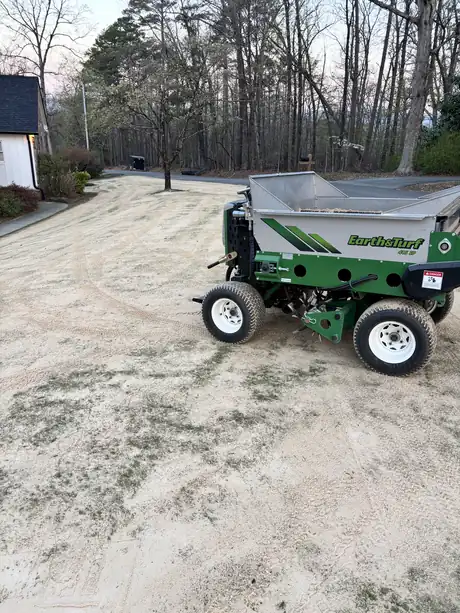
Thin passes of sand, a quarter inch at a time, dragged in and repeated, that turn a bumpy lawn into one that is genuinely flat, not just mowed short.
Learn more
-
Aeration & Overseeding
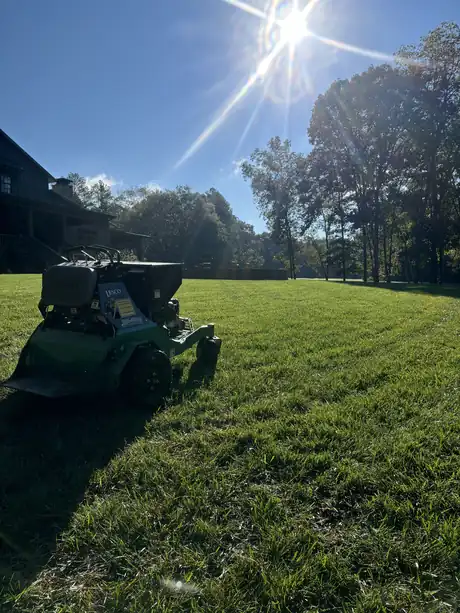
Core aeration at peak growth for Bermuda and Zoysia, and a September aeration-and-seed for tall fescue. The two are not the same job.
Learn more
-
Lawn Pest Control
Grub preventive before the eggs hatch, armyworm scouting through August, and guaranteed two-application fire ant control on the ground the family actually uses.
Learn more
-
Mosquito Control
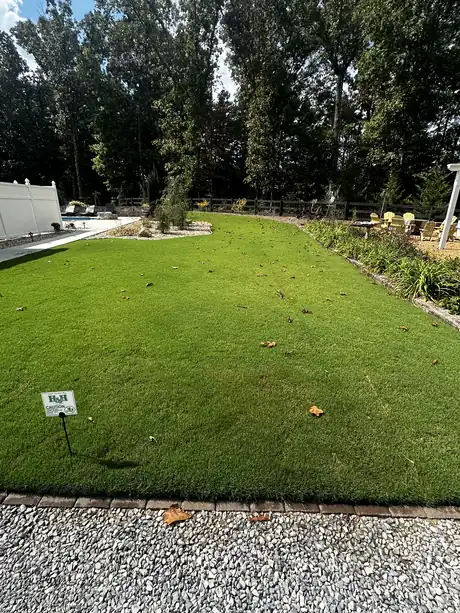
Harborage treatment every 30 to 35 days from spring through first frost, plus the standing water on the property that no spray will ever fix.
Learn more
Put your lawn on the program.
Free estimate, no contract, and 10% off your first year for new customers. We will tell you what your soil is short of before we sell you anything.